Future Frother Redesign
Problem Statement:
In my Designing Interactive Experiences class at Northeastern University, I was challenged to redesign an everyday product with no technological or practical limitations. I chose a handheld milk frother, something I regularly use to make matcha and lattes, and explored how it could become more intuitive, personalized, and enjoyable rather than simply functional.
Ideation:
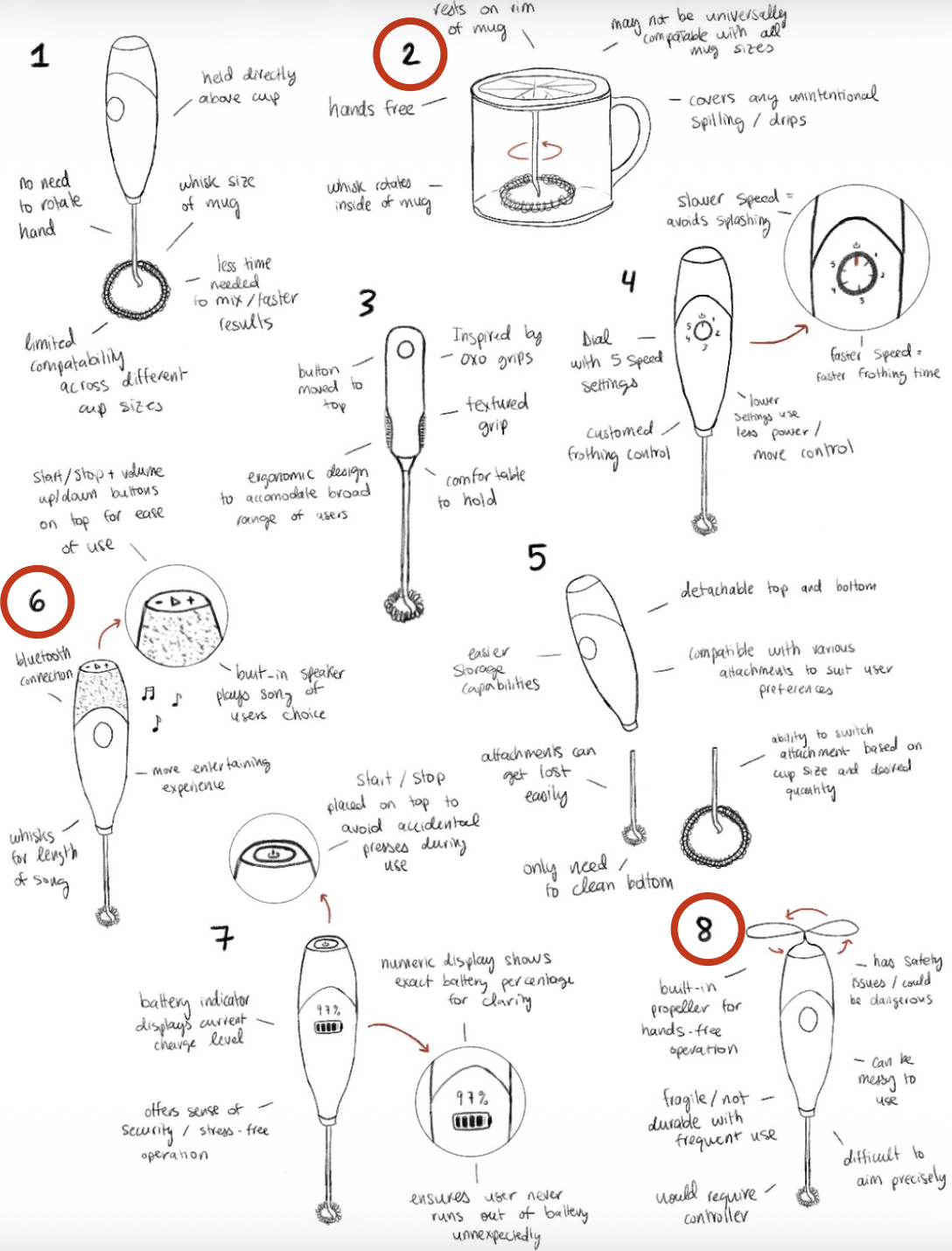
Started by identifying limitations of existing frothers, including handle comfort, fixed whisk size, limited speed control, cleaning, and lack of personalization.
Sketched eight initial concepts, exploring adjustable whisk heads, hands-free operation, interchangeable attachments, textured grips, battery indicators, speakers, and other digital features.
Used the project's "no limits" constraint to explore how technology could completely change the experience of using an otherwise simple kitchen product.
Iteration:
I challenged myself to move beyond improving functionality and consider how the product could create an emotional experience.
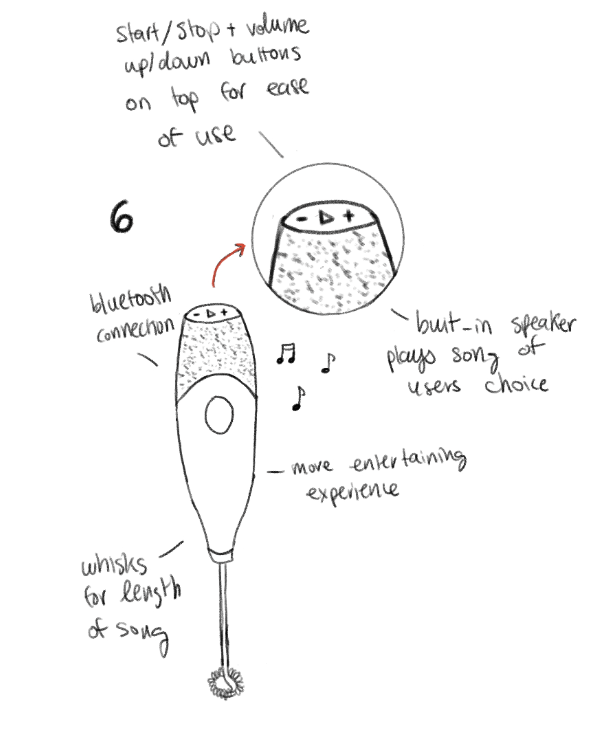
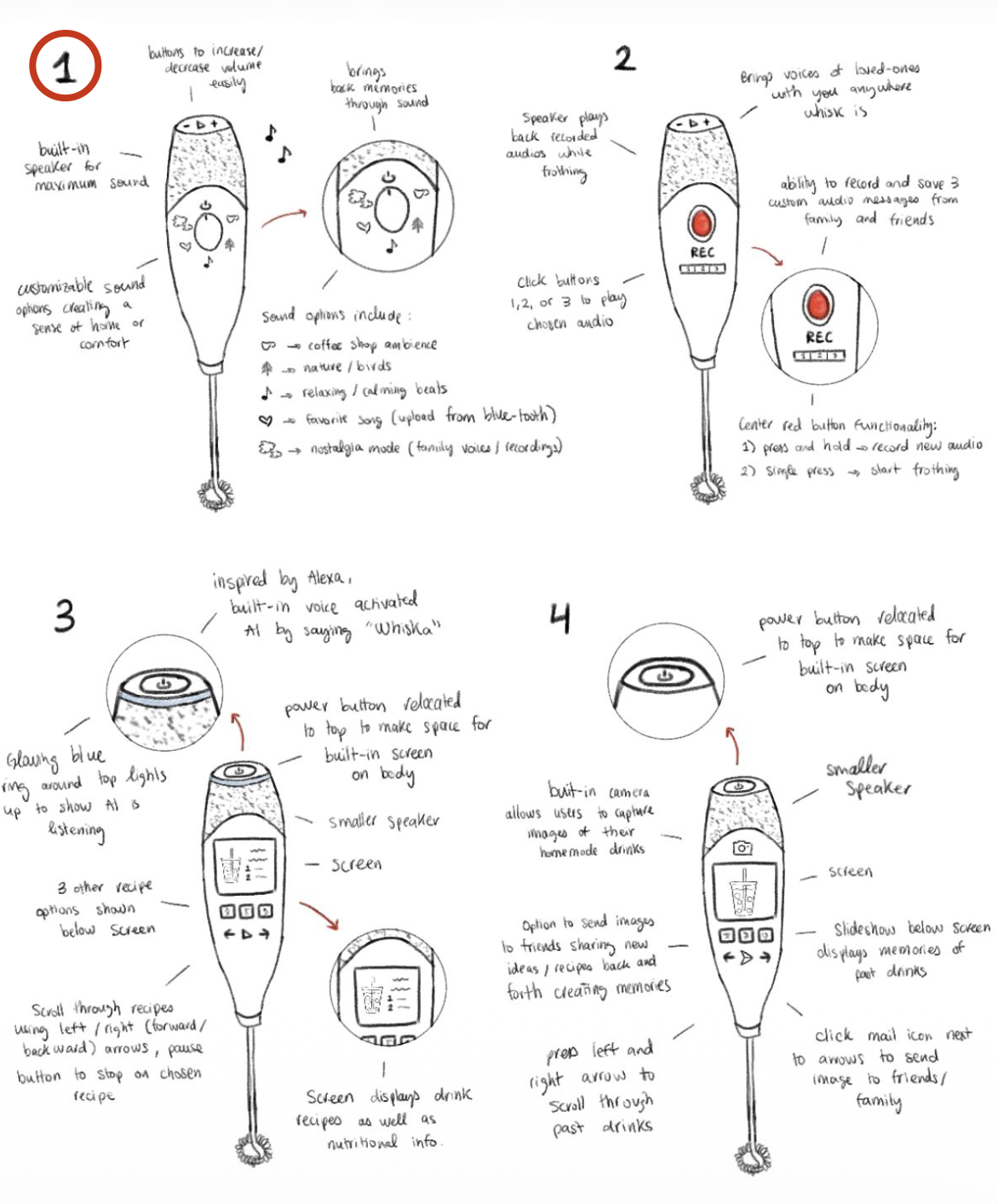
Shifted the design direction toward comfort, nostalgia, memory, and human connection, exploring how sound and interaction could make an everyday routine more meaningful.
Developed new concepts around music, recorded messages, family recipes, and personalized experiences that could make users feel connected to other people while using the frother.
Final Concept:
Skills Demonstrated:
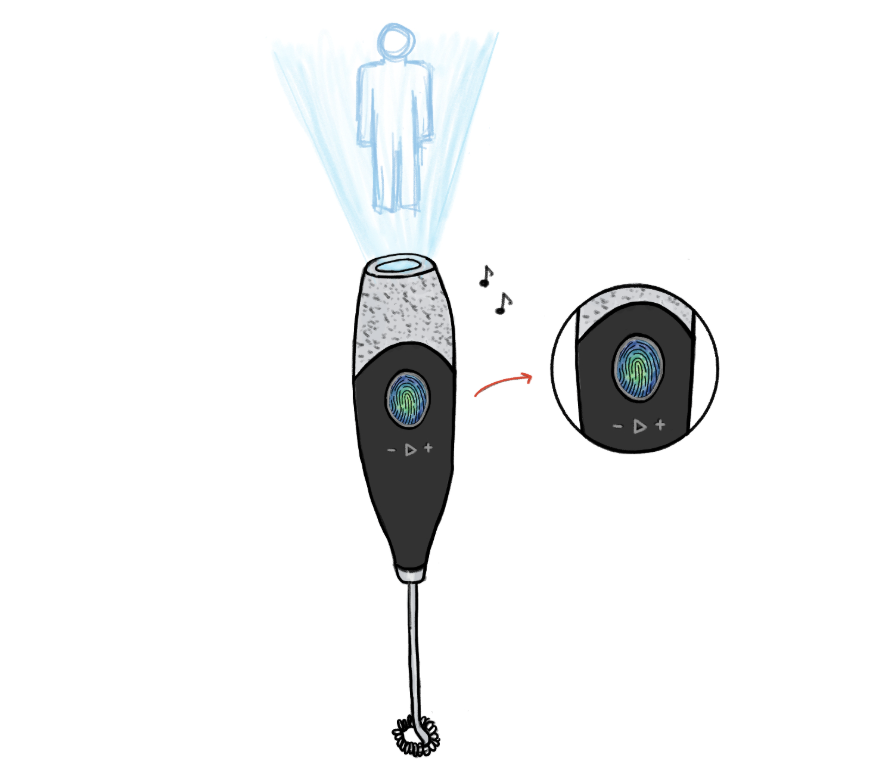
Designed a speculative frother with a sensor integrated into the power button that detects the user's mood and adapts the experience accordingly.
The frother would select music based on the user's emotions while they prepare their drink, turning a repetitive task into a personalized experience.
Incorporated a holographic projection concept that could display someone meaningful to the user sharing a message such as "have a good day," creating a sense of connection during an everyday routine.
Creative Ideation – Explored unconventional and futuristic product concepts
Iterative Design – Changed direction and developed concepts through feedback
Human-Centered Design – Considered emotion, memory, and connection alongside functionality
Concept Sketching – Communicated evolving ideas through detailed design sketches