Accessible Carry-On Suitcase – Integrated Seating Solution for Travelers with Arthritis
Problem Statement:
In my IB Design Technology class, I was tasked with designing a suitcase specifically for senior citizens with arthritis. Traditional suitcases can be difficult to grip, maneuver, and use for people with limited mobility, so my goal was to create a solution that was ergonomic, lightweight, and easy to operate. Through user research, I also identified prolonged standing while traveling as a challenge, leading me to incorporate an integrated fold-out seat to improve comfort and independence.
Ideation:
Researched the challenges travelers with arthritis face and identified grip, maneuverability, prolonged standing, and stability as key areas to address.
Defined design requirements including standard carry-on dimensions, low weight, spinner wheels, accessible handles and zippers, and an integrated seating system.
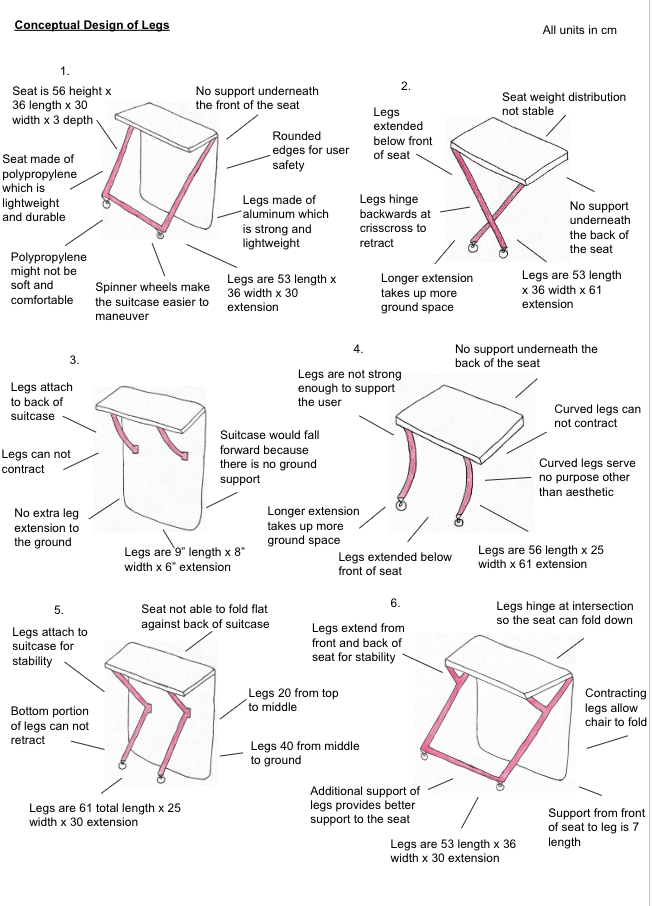
Sketched 12 concepts, exploring different suitcase shapes, seat configurations, and retractable leg mechanisms while evaluating stability, weight distribution, comfort, and ease of operation.
Iterated specifically on the seat-support mechanism, exploring different leg geometries and folding methods to determine how the user's weight could be safely supported without compromising portability.
Conceptual Modeling:
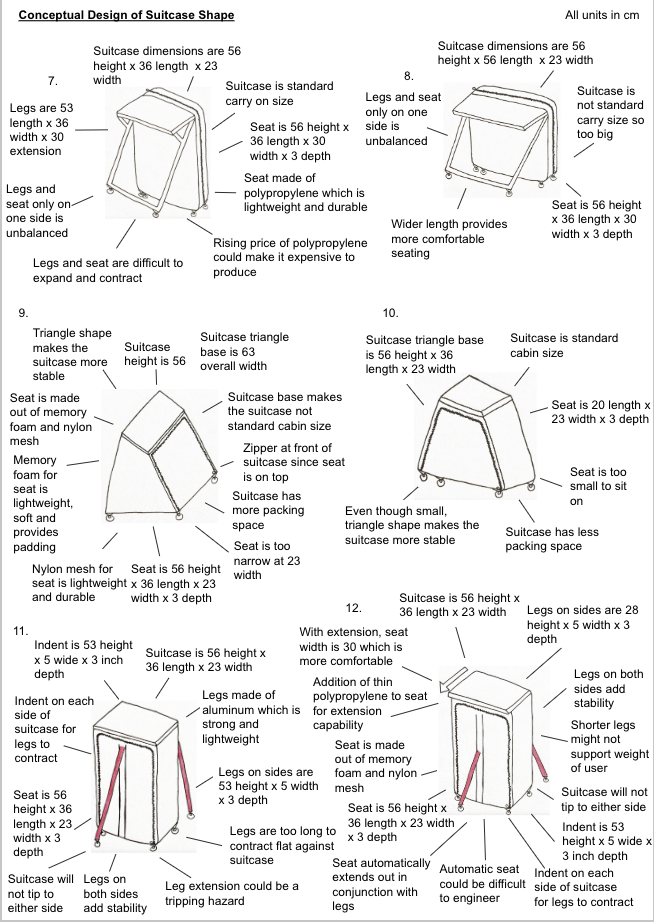
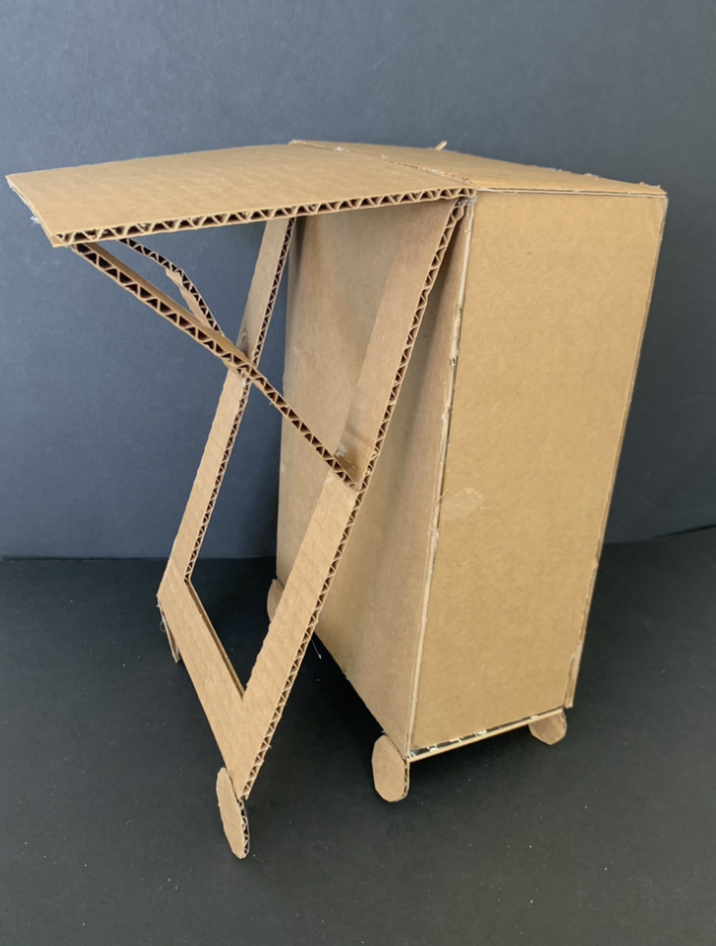
Narrowed my sketches to three concepts and built scale cardboard models to physically evaluate their stability, proportions, folding mechanisms, packing space, and seating configurations.
Concept 1: Used a large fold-down seat and crossed support legs, providing comfortable seating but introducing additional bulk, weight, and potential instability.
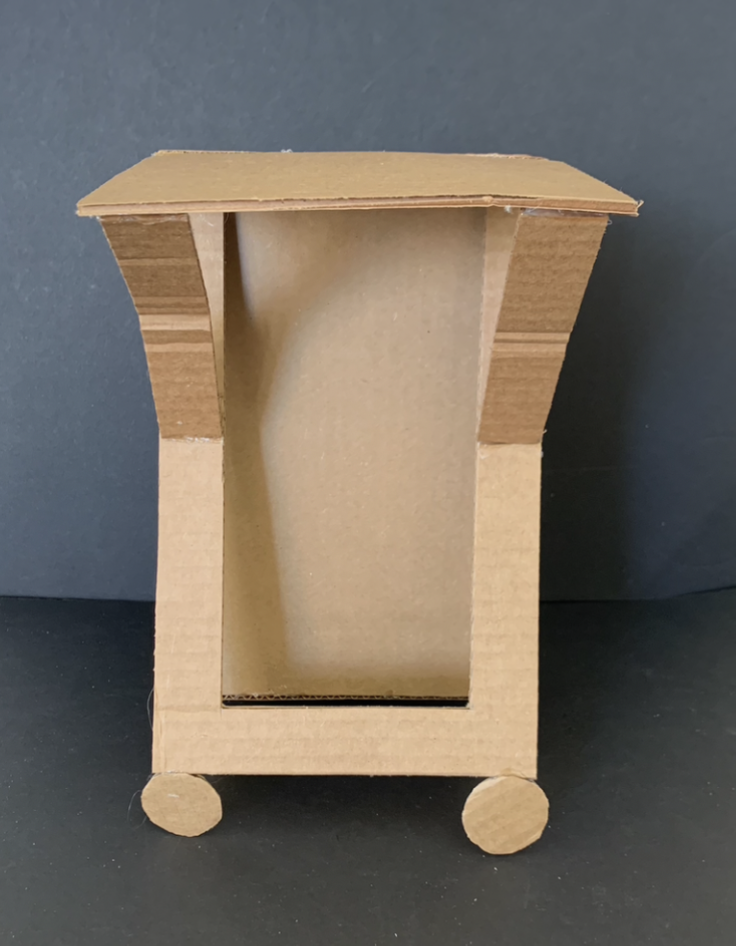
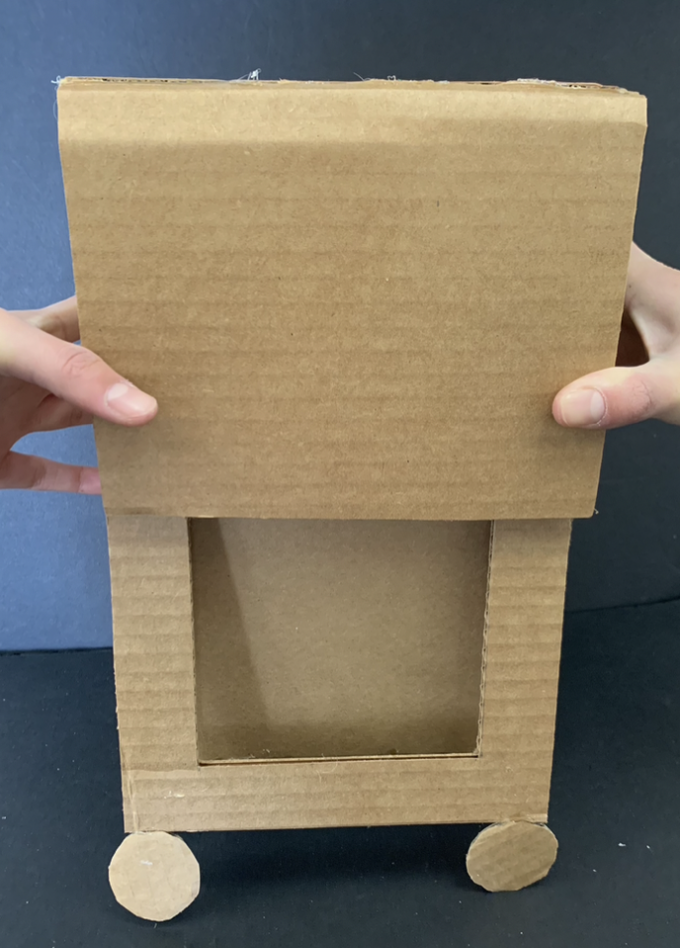
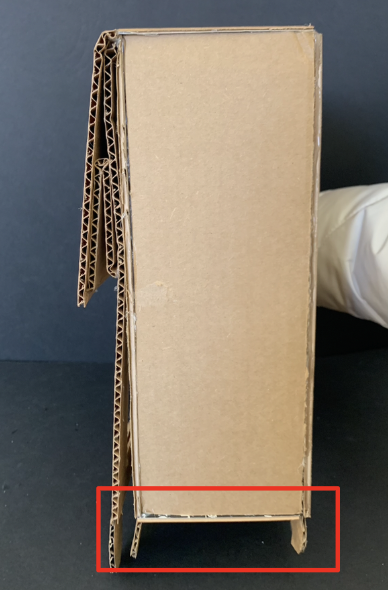
Concept 2: Explored a triangular suitcase that created a wider, more stable base, but testing showed the seating surface and packing space were too limited.
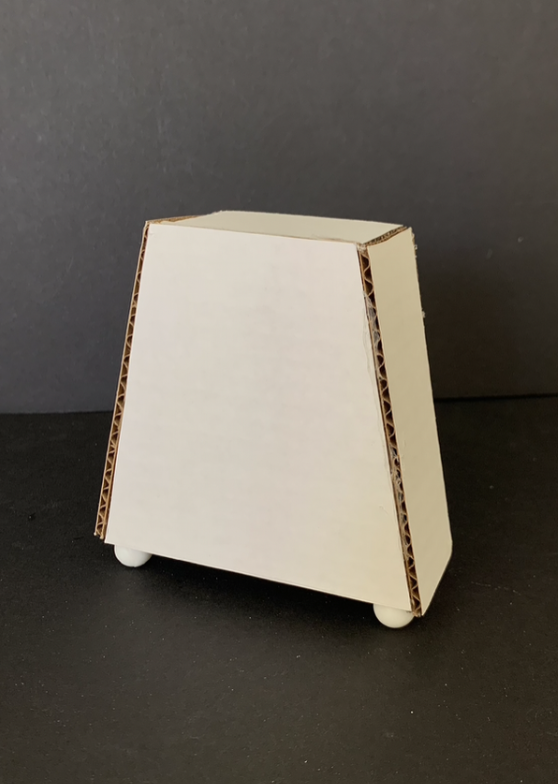
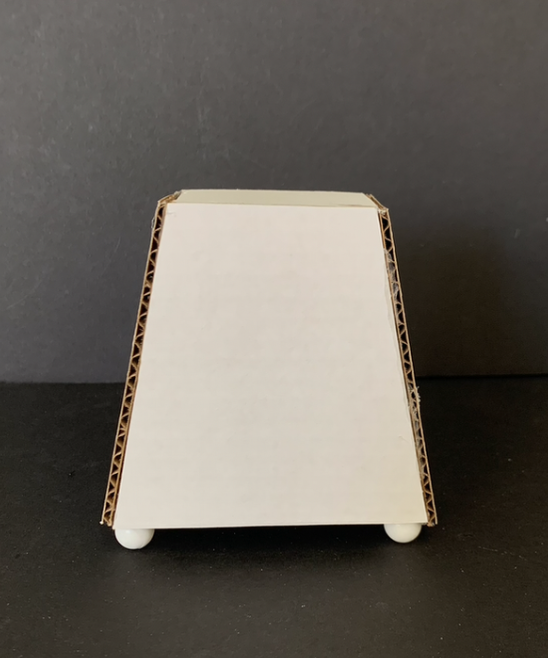
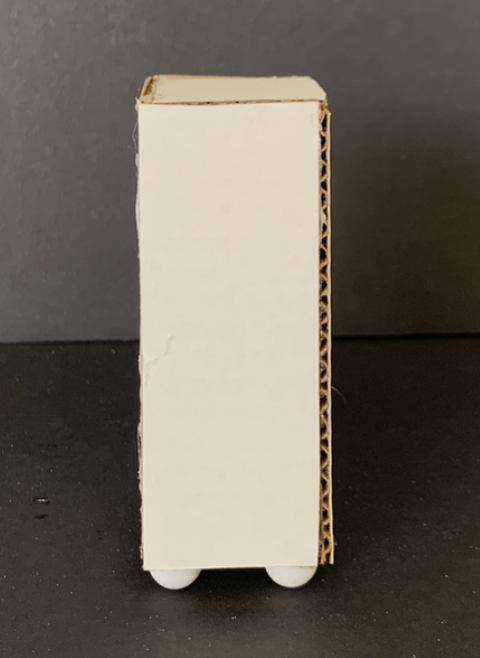
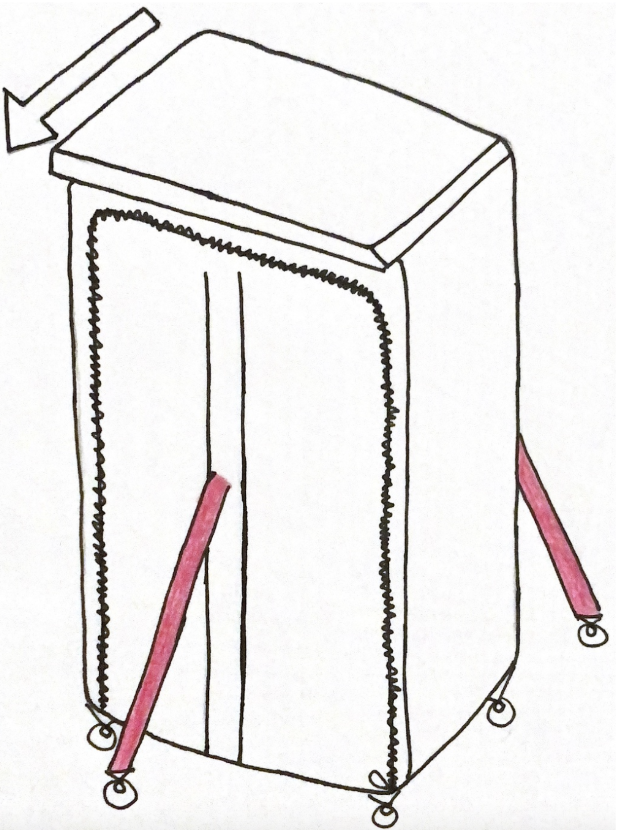
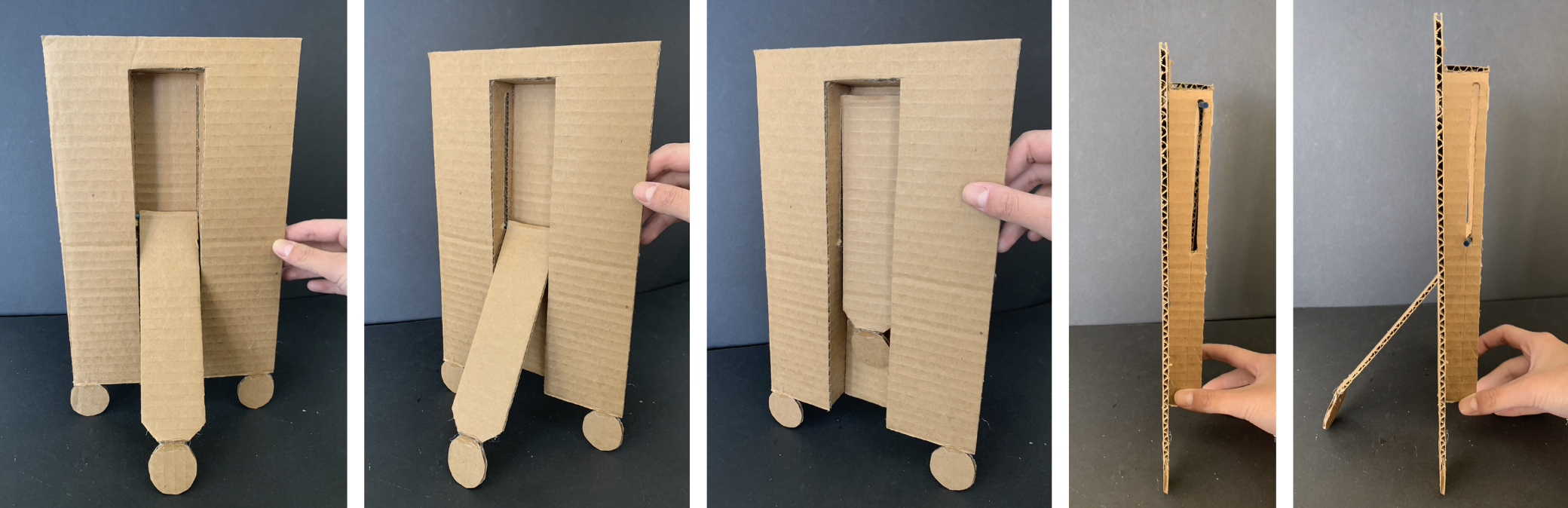
Concept 3: Integrated retractable support legs into recessed tracks within the suitcase, allowing the mechanism to remain compact and giving the suitcase the appearance of a conventional carry-on when closed.
Final Design & Justification:
Selected Concept 3 by comparing all three models against the original design specifications, including stability, portability, seating functionality, size, material selection, and accessibility.
Designed the legs to extend and retract with the seat, reducing the amount of manual operation required for a user with limited grip strength while keeping the mechanism contained within the suitcase when stored.
Proposed polypropylene for the suitcase shell, stainless steel for the support structure, and memory foam with nylon mesh for the seat, balancing strength, weight, durability, and comfort.
Identified additional engineering development needed for a future iteration, particularly locking the seat and support legs in position and preventing the spinner wheels from rolling while the user is seated.
Skills Demonstrated:
Ideation & Concept Development – Generated and evaluated multiple design solutions.
Rapid Prototyping – Built physical models to test mechanisms and stability.
Iterative Design – Refined concepts through testing and comparison.
Human-Centered Design – Designed around accessibility, comfort, and usability.